

Season 01 Finals Date Confirmed
Mister Afrikana International will crown its first titleholder on July 29, 2028. The date is locked, the venue shortlist is closed, and the whole season now runs backwards from that night.
ReadLatest
Everything happening on the road to the Season 01 grand finale on July 29, 2028. Dates, applications, licences, partnerships and the people building it.
The Wire
Announcements as they happen. Select any headline to read the full notice.
Mister Afrikana International will crown its first titleholder on July 29, 2028. The date is locked, the venue shortlist is closed, and the whole season now runs backwards from that night.
ReadMen of African and diaspora descent aged 18 to 39 can now register in any of the territories we operate in. Here is who is eligible, what we ask for, and what happens after you apply.
ReadStrength, intelligence, leadership, endurance, culture, brotherhood, purpose, excellence. Eight pillars, one mark, and no single round that can win you the title.
ReadOne nation, one exclusive licence, twelve months and renewable. Applications are open for every territory. Here is the role, the commitment, and what you get.
ReadHeadline, Principal, Regional and In Kind tiers, each capped so the partners inside it stay visible. Here is what each tier buys and who it suits.
ReadA first look at a new era of competition for men of African and diaspora descent. Ninety seconds, shot across three territories.
Read

Announcement
Mister Afrikana International will hold the Season 01 grand finale on July 29, 2028. The date is now locked, the venue shortlist is closed, and every part of the season runs backwards from that night. It is the first time a global competition for men of African and diaspora descent will be decided on this scale, and we intend to be ready for it.
We are not announcing a date to make a headline. We are announcing it so that every director, every contestant and every partner can plan against it.
Season 01 founding statement
Announcing a date almost two years out is deliberate. A competition of this size cannot be assembled in a few months. National Directors need a full year to run their selections properly. Contestants need time to build the community projects they will eventually be judged on. Partners need a fixed point in the calendar to plan campaigns around. Publishing the date early is what makes all three possible.
The season runs in four stages. Applications and review come first, and they are open now in every territory we operate in. The qualifying round follows, where applicants are assessed against the eight pillars and shortlisted. Then comes the training camp, where the field is narrowed and the men are coached in stage craft, interview, culture and platform. Finally, the grand finale on July 29, 2028, where one man is given the title.
National selections run through the twelve months preceding the camp. Each National Director sets their own timetable inside that window, which means the calendar will look slightly different in every country. What will not differ is the standard. Every territory is judged against the same eight pillars, and every director is briefed on them before their selection begins.
The venue shortlist is closed. We are not announcing the host city until the agreement is signed, because we have no interest in a headline we then have to walk back. What we can say is that we are looking for a room that can hold a genuine international audience, in a city with real connections to the diaspora rather than a convenient conference centre.
When it is signed, the announcement goes out here first, then to National Directors, then to the press list. If you are covering the season, the press and media section explains how to request accreditation and assets.
If you are thinking about competing, the single most useful thing you can do this year is start the project. Not the walk, not the wardrobe, not the photographs. The project. Every man who reaches the international stage arrives with a piece of work in his community, and the men who do well are the ones who have been doing it long enough to show results.
You must be 18 to 39 on finals day, of African or diaspora descent, and able to hold a passport from the country you represent. The full criteria are on the eligibility section of the contestants page, and applications can be started from the contestant application.
National Director licences are open in every territory. One nation, one exclusive licence, twelve months, renewable. The role, the commitment and what the licence includes are set out on the National Directors page, and applications are taken through the licence application form.
Partnership opportunities for Season 01 are also open, across four tiers, each capped so the brands inside it stay visible. Because the date is now fixed, partners can plan a full twelve month association rather than a single night. Details are on the Sponsors and Partners page.
July was chosen for two practical reasons. It sits outside the major international pageant calendar, which means the final does not compete for venues, press or audience with events that have decades of momentum behind them. It also falls in the northern hemisphere summer, when travel is cheapest and easiest for the largest share of our territories, and in the dry season across much of West and Southern Africa, which widens the list of cities that can realistically host us.
The title carries three things. Funding for the project the winner arrived with, released against milestones rather than handed over in a single cheque. A platform, meaning the organisation's channels, partners and press relationships for the duration of the reign. And accountability, in the form of published reporting on what the money did and what changed. That third element is the one that most surprises people, and it is not negotiable.
We should be honest that a first titleholder inherits a smaller platform than a tenth one will. There is no precedent yet, no alumni network, no established audience. Whoever wins on July 29, 2028 is not stepping into a finished institution. He is helping to build one, and the men who follow him will have an easier road because of it. Some will read that as a drawback. We read it as the most interesting part of the offer.
One thing will not change between now and finals night. We would rather crown a smaller field of genuinely strong men than fill a stage to look impressive. If a territory has not found a man who meets the standard, that territory sends nobody, and the final runs short rather than padded. The date is fixed. The standard is fixed. The field size is not.
This is also why we are publishing the date now rather than waiting until the field is set. A fixed date forces everyone, including us, to work to a schedule instead of waiting for a field to appear. It is uncomfortable, and that is precisely the point.
Modern beauty pageants have a long and often contested history, and men's competitions such as Mister World and Mister International have spent decades working out what a title should actually mean. We have learned from all of them, including from their mistakes.
Our answer is that the title is not a prize. It is funding, platform and accountability for work that outlasts the evening it is handed over on. The Impact Foundation exists to make sure that is not just a line in a press release. Everything the titleholder builds is measured and published.
There will be more announcements between now and July 2028. Appointments, venues, partners, and the men themselves. Save the date. Everything else on this page leads to it.
applications are open in every territory, and the men who reach the stage will be measured against the eight pillars.
Official announcements, milestones and news from Mister Afrikana International, published here first.
Take your place


Applications
Applications for Season 01 are open. If your people are African, you are eligible, wherever in the world you were born. That is not a slogan. It is the single rule the whole competition is built on, and it is worth being precise about what it means in practice.
If your people are African, you are eligible. That is not a slogan. It is the single rule the whole competition is built on.
The eligibility standard, Season 01
The African diaspora is not a footnote to the continent. It is tens of millions of people across the Caribbean, the Americas, Europe, Asia and the Pacific, most of whom have never lived in Africa and all of whom carry its heritage. A competition for men of African descent that only accepted men holding an African passport would exclude most of the people it claims to represent.
So we do not ask where your passport was issued. We ask whether your people are African, by birth, ancestry or lineage, and whether you can document it. That covers a man born in Kumasi, a man born in Brixton to Ghanaian parents, a man born in Recife whose family has been Brazilian for six generations, and a man born in Kingston whose ancestors were carried there by force.
The Afro-Caribbean, Afro-Latin American and Black British communities are not diaspora branches of the contest. They are the contest. Roughly half the territories we operate in sit outside the African continent, and we expect a large share of our entrants, and quite possibly our first titleholder, to come from them.
Three things are non negotiable. You must be male at birth and identify as a man. You must be 18 to 39 on finals day. And you must hold, or be able to obtain, a valid passport from the country you wish to represent, because you cannot travel to an international final without one.
Beyond that, you need a nation to represent, established by birth, citizenship, residence or documented heritage, and you need a community project or advocacy platform. That last one is the requirement applicants most often underestimate. It is not a formality. It is the substance of what you will be judged on and the reason the title exists.
The application runs in five steps. Personal details and proof of age. Nationality, country of residence and the nation you wish to represent. Contact details and your social presence, where Instagram is required and the rest is optional. Physical details for wardrobe, styling and stage production. And finally your statement, your project and your answer to why you want this.
You will need photographs. A headshot and a full length shot, well lit and recent. They do not need to be taken by a professional, but they do need to look like you on a good day rather than you in a filters app. We are assessing a person, not a portfolio.
Applications are reviewed within five to seven working days. If you are successful, your National Director contacts you with next steps for your territory. If there is no director appointed in your nation yet, you will still hear from us, because your application is also a signal that there is talent there worth building a selection around.
A practical note for applicants in nations where we have not yet appointed a National Director. Apply anyway. Your application is logged against your territory, and it does two useful things. It puts you in front of us early, and it demonstrates to potential directors that there is talent in that country worth building a selection around. Several of our most promising early applications have come from territories that had no director at the time.
We are not asking for an application fee at this stage. We are not asking you to sign with an agency. We are not asking you to lose weight, change your hair, or buy a wardrobe before you are selected. If anyone contacts you claiming to represent Mister Afrikana and asks for money to process or fast track your application, they are not representing us. Report it through the contact page and we will deal with it.
Instagram is required on the form, and it is the only platform we ask for. It is not scored as a popularity contest, and a man with four hundred followers is not disadvantaged against a man with forty thousand. What we are looking at is whether you use it like a person with something to say. A small account with real writing in the captions reads better than a large one with nothing behind it.
Most men who apply well nearly did not apply at all. The reasons are usually the same three: I am not the right age, I am not photogenic enough, or I do not have a project big enough. The first is a genuine constraint and easy to check. The second is almost always wrong, because we are not scoring photographs. The third misunderstands the brief entirely. A project does not need to be large. It needs to be real, and it needs to exist.
Three pieces of advice, offered plainly. First, write the statement yourself. We can tell when an application has been produced by a consultant, and it reads worse, not better. Second, be specific about the project. A man who says he wants to mentor boys in his district and names the school is far more convincing than a man who says he wants to empower youth.
Third, do not wait until you feel ready. Most applicants who eventually do well applied before they felt prepared. The camp exists to close the gap. What it cannot do is manufacture a purpose for a man who has not found one.
Common questions are answered in the frequently asked questions. The full criteria sit on the eligibility section of the contestants page, and the roster of territories, all 111 of them, is on the contestants roster.
Start your application on the contestant application page. If you are not sure whether you qualify, apply anyway and let us make that call rather than making it for us.
territories without a director yet are covered in the licence announcement, and every application runs backwards from the locked finals date.
Official announcements, milestones and news from Mister Afrikana International, published here first.
Take your place


The Competition
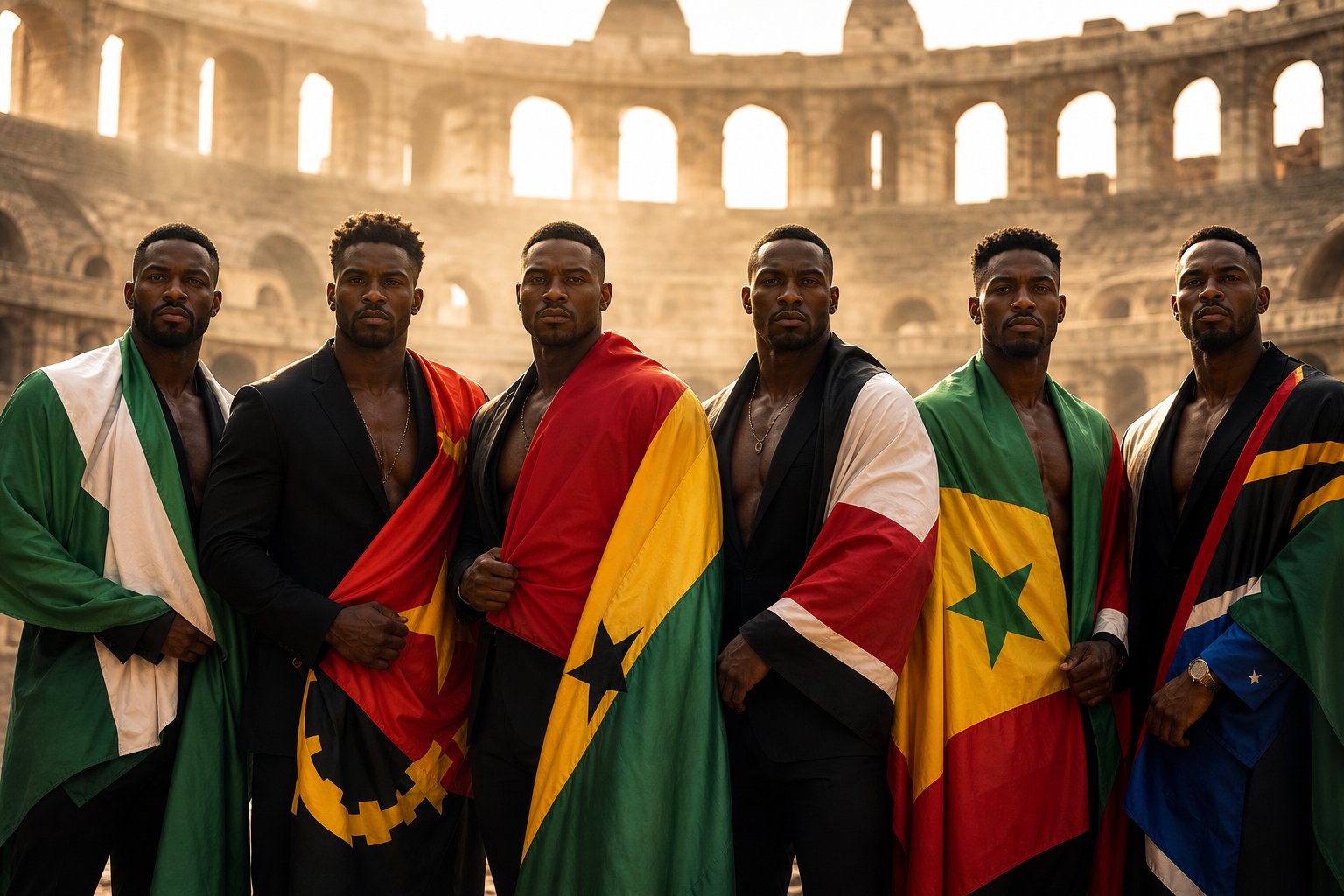
Mister Afrikana is not decided on appearance. Every contestant is measured across eight pillars, and the title goes to the man with the strongest mark across all of them. This article sets out what each pillar means, how it is assessed, and why we built the scoring this way.
Strength without purpose is just noise. The pillars exist so that neither gets crowned without the other.
Pillar charter, Season 01
Most competitions in this space resolve to a walk, a torso and an answer to one question. That format is easy to televise and easy to game. It rewards the man who has been coached hardest rather than the man who is most worth watching, and it produces winners who struggle to say what they did with the year they were given.
Our answer is to score eight things and to weight none of them decisively. A man who is exceptional in one area and mediocre in six will lose to a man who is strong across all eight. That is intentional. We are looking for a man who is hard to beat across the board, not a man who is unbeatable in one thing.
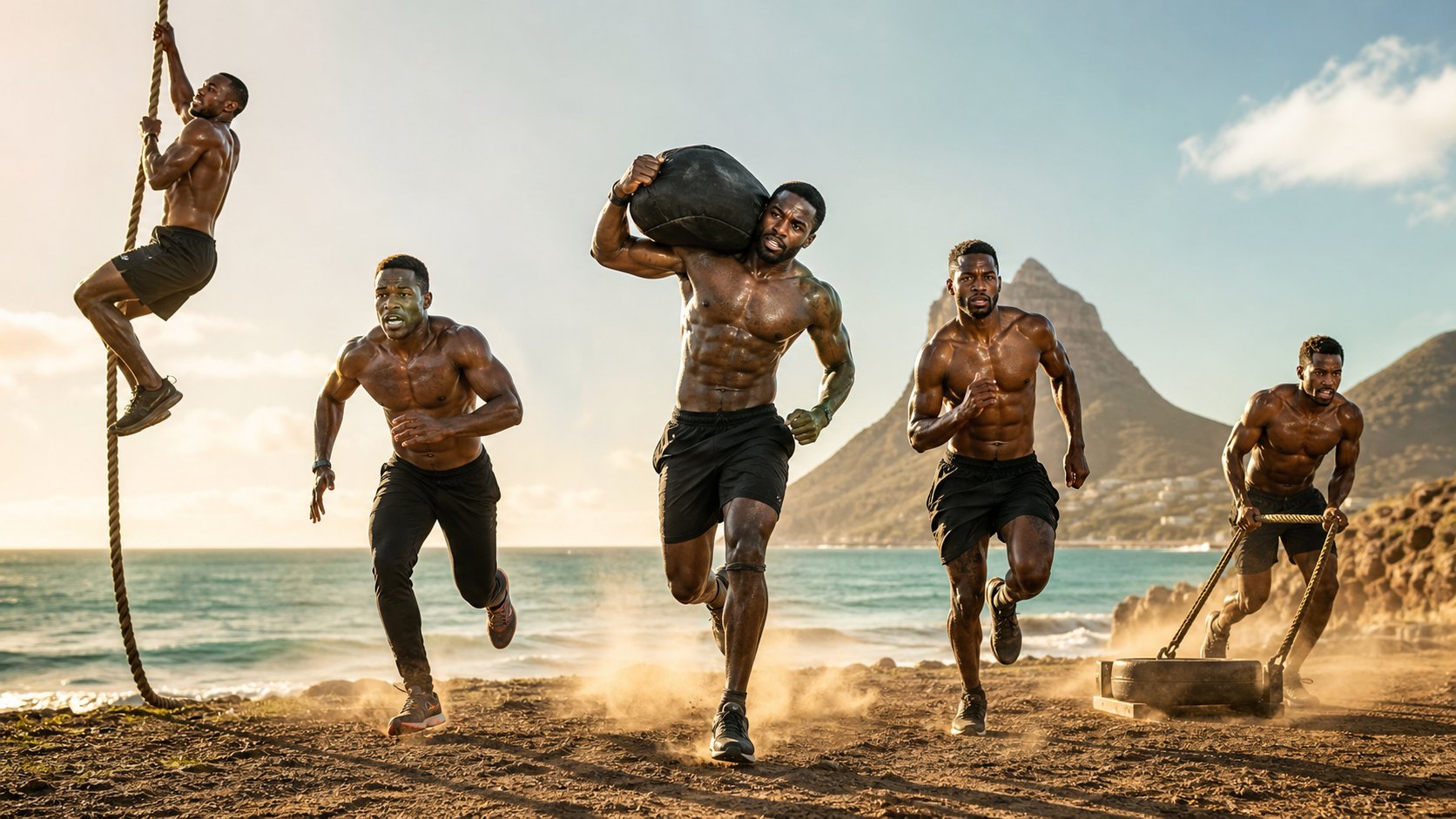
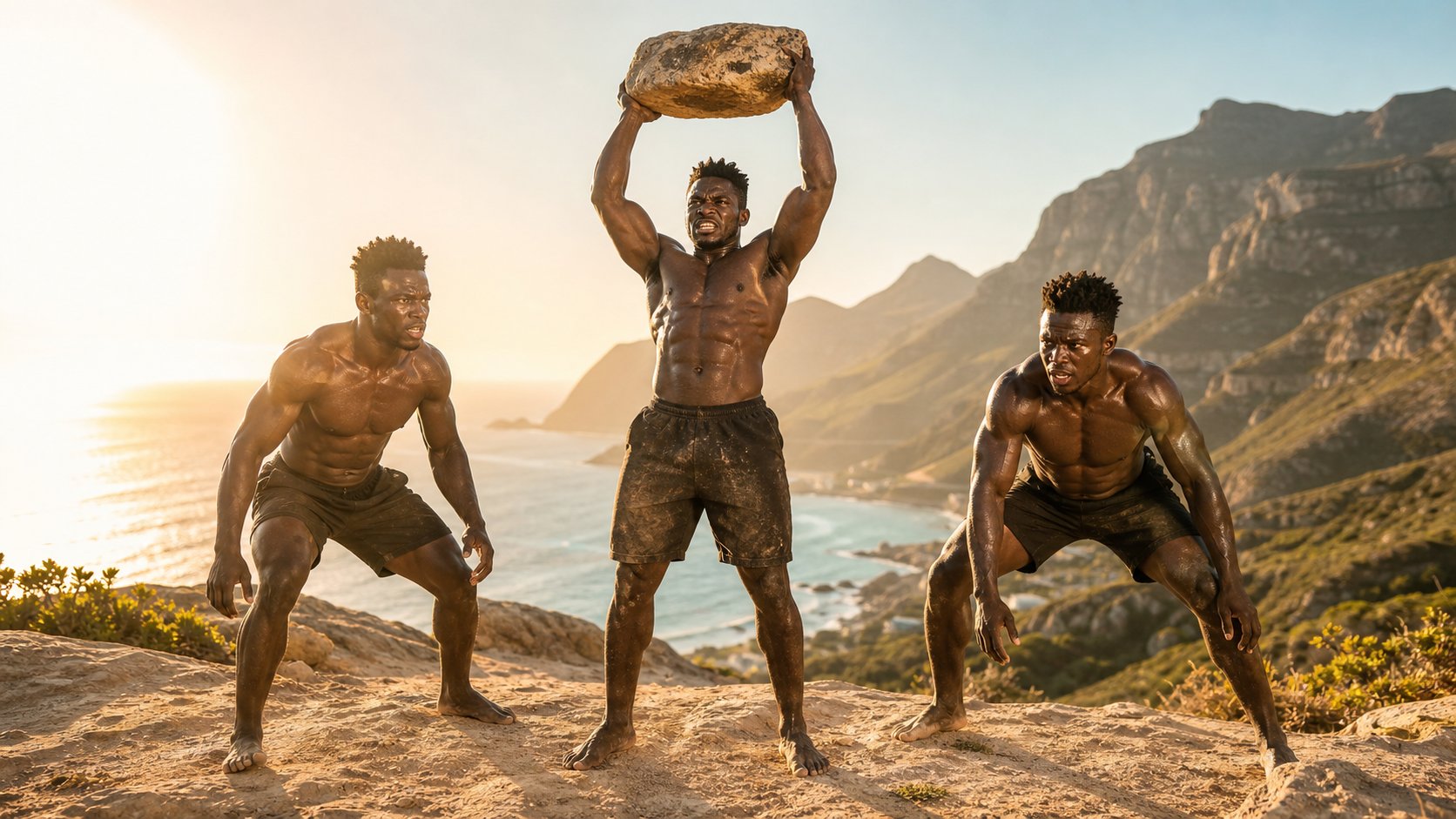
Physical capability, assessed in the open. Not a bodybuilding contest, and not a physique show. We are testing whether a man can do work, carry load, and move with control under fatigue. The thinking is simple: a titleholder spends a year travelling, appearing and working, and the body has to hold up.
Assessed in interview and in the qualifying round. We are not testing trivia. We are testing whether a man can think in real time, hold a position under challenge, and change his mind when the argument deserves it. The questions are harder than applicants expect, and the marking rewards honesty over polish. A man who says he does not know is scored higher than a man who bluffs.
Evidence, not assertion. Have you led anything? A team, a business, a classroom, a club, a family. What happened to it while you were in charge, and what happened after you left? Leadership is the pillar that most often separates the field, because it is the hardest to fake on a stage.
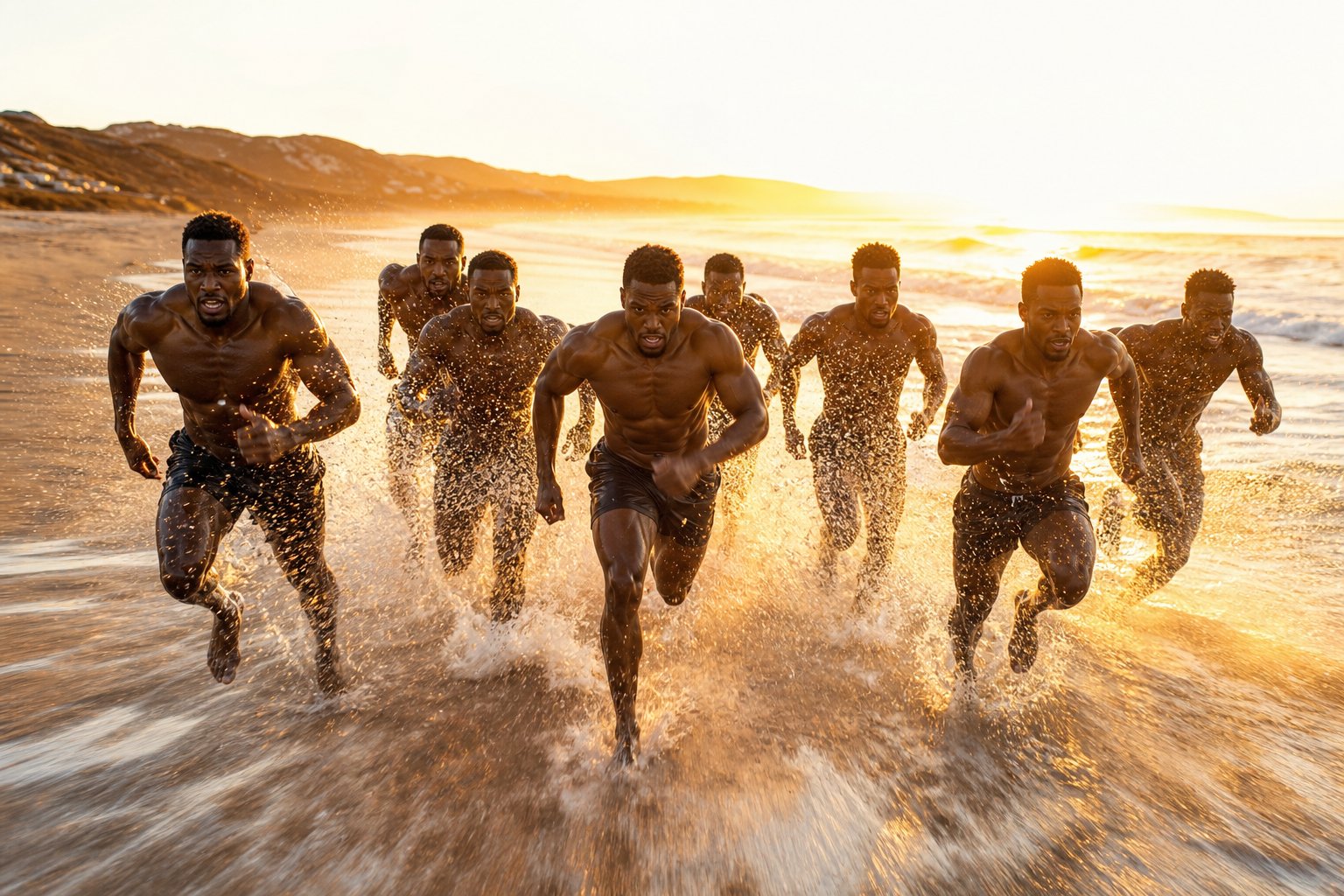
The camp is deliberately demanding, and this pillar measures whether a man sustains effort and composure across days rather than minutes. Endurance is physical and temperamental at once. The man who is excellent on day one and gone by day four scores poorly, and so does the man who is steady but never stretches.
You are representing a nation. That means knowing it. Its history, its languages, its current realities, its arguments with itself. A contestant who can recite facts about his country but cannot speak to what it is like to live there now will not score well. This pillar is where diaspora contestants often shine, because they have had to think about where they are from in a way men who never left have not.
How you treat the men standing beside you. This is assessed throughout, by people whose only job is to watch, and it is the pillar most commonly lost in the camp rather than on the stage. Hazing, sabotage and cold shouldering are not competitive tactics here. They are disqualifying behaviours.
The project. What are you building, who does it serve, and what would change if the funding doubled? Purpose is the pillar most tightly tied to the title, because the title exists to fund it. A man with a compelling project and average scores elsewhere can still go a long way. A man with no project does not reach the final, whatever else he can do.
The sum of it. Excellence is not a separate test but the mark a man leaves across the other seven, plus the standard he holds himself to when nobody is scoring. It is what separates a contestant who met the bar from one who raised it.
Each pillar is scored independently by people who do not see the other marks. That separation matters. It prevents a strong impression in interview from inflating a man's score in culture, and it prevents a weak walk from dragging down his mark for purpose. Judges are briefed on their pillar alone, and the aggregate is compiled by the organisation rather than in the room.
Brotherhood. In every competition that scores it, contestants lose more ground here than anywhere else, and they do it without realising. The behaviours that cost marks are small and habitual: not passing on information, quietly briefing against another man, being pleasant to judges and cold to competitors. It is assessed across the entire camp by people whose only job is to watch, and by the other contestants, whose view we take seriously.
Yes, within reason. A man who is genuinely poor at physical endurance can still win if he is exceptional across the other seven, and the reverse is also true. What you cannot do is be poor in two or three and expect the rest to carry you. The arithmetic catches it. This is the single biggest difference between our scoring and the formats most applicants are used to, and it is worth understanding before you decide where to spend your preparation time.
Spread your effort. The instinct of most applicants is to double down on whatever they are already good at, because that is where progress feels fastest. The scoring rewards the opposite. An hour spent turning a weakness into something respectable is worth more to your total than an hour spent taking a strength from excellent to exceptional. If you take one thing from this article, take that.
Men's international competitions have been refining this problem for years. Manhunt International and Mister International both moved away from pure physique judging, and the broader pageant world has spent the last decade rethinking what these titles are for. We have taken that thinking and made it stricter: eight pillars, all of them scored, none of them decisive.
You can read how the pillars feed into the rounds on the competition page, and how they are coached on the training camp section of the contestants page. When you are ready, apply through the contestant application.
the pillars are scored round by round on the road to the finale, and the men who embody them can apply now.
Official announcements, milestones and news from Mister Afrikana International, published here first.
Take your place


National Directors
A National Director holds the Mister Afrikana licence for one nation. They run the selection, build the team, stage the national final, and send their titleholder to the world stage. Licences are open now in every territory we operate in, and this article explains exactly what the role involves before you apply.
A licence is not a trophy. It is a twelve-month job with a title at the end of it.
National Director charter
One nation, one licence, exclusive for the term. When a director is appointed to a territory, nobody else can run a Mister Afrikana selection there. That exclusivity is the entire commercial value of the licence, and it is why we are slow to award them. The initial term is twelve months and renewable on performance.
The licence covers the national selection only. The international final, the camp and the foundation programmes remain with the organisation. What you own is your territory, your team, your sponsors and your production, inside a standard we set and brief you on.
Six things. Open and run applications in your territory. Shortlist, interview and select the man who will carry your flag. Assemble and lead a team, covering judges, choreography, styling, photography and media. Stage the national final, with venue, production, sponsors and ticket sales all on you. Prepare and accompany your titleholder through the camp and the international final. And hold the standard, so that a man arriving from your nation has genuinely been tested against the eight pillars.
The last one matters more than applicants expect. A director who sends an untested man because he is popular locally damages his own territory's credibility at international level, and we will say so.
A track record in something hard. Events, media, business, sport, community organising. We want evidence that you have built or run something, not a plan to start. Roots in the territory, meaning you live there or are deeply connected to it, with a feel for its venues, press and people. A team, or a credible answer about who you would bring in.
Commercial capability, because the national final needs sponsors and ticket sales and nobody is going to sell them on your behalf. Alignment with the eight pillars. And integrity, which we check, because this is a title for men of character chosen by people of character.
Exclusive territory for the term. A full brand kit covering logo, wordmark, templates and stage looks. Onboarding and training on the format, the pillars, the judging standard and the reporting line. The production playbook from the international final, including run of show, judging sheets, scoring and music cues.
Revenue share on the sponsorship, ticket and partnership income you generate, with the majority staying in your territory. And a seat at the international final, travelling with your titleholder and standing on that stage with him.
We are not publishing a fee schedule here because the licence fee varies by territory size and market. What we will say is that the model assumes you will fund the national final through local sponsorship and ticket sales. If your plan depends entirely on your own money and no local partners, this is probably not the right opportunity for you, and we would rather say that before you apply than after.
Directors keep the majority of what they generate. The organisation takes a share and the foundation takes a share. The arrangement is set out in full before anything is signed.
Three, and we would rather name them now. The first is treating this as a title purchase rather than a production business. It is not a badge you buy. The second is underestimating the sponsorship work. Most first year directors assume ticket sales will carry the national final, and they rarely do. Sponsor income carries it, and sponsor income takes months to secure. The third is trying to run the whole thing alone.
Applications are reviewed on a rolling basis, territory by territory. If we want to proceed, you will be invited to a conversation, usually within two weeks, in which we will ask about your team, your funding plan and your venue options. There is no panel interview and no presentation deck required. We are trying to establish two things: whether you can actually stage a national final, and whether we would want to work with you for a year.
Most first year directors will have other work, and we expect that. The licence is not a full time job in the abstract, but it becomes one in the eight weeks before a national final. What we need to know is whether you can clear that space when it matters, and whether your other commitments conflict commercially. A director who runs a competing event business in the same market is a problem. One who runs an unrelated business generally is not.
The difficult part of this role is not the production. Most people who apply can run an event. It is the selection: telling a man who has invested months in his application that he has not made it, and doing it in a way that leaves him willing to try again. Directors who cannot do that kindly should not take the licence, because they will damage their territory's reputation faster than any production failure could.
The application runs in four steps and takes about eight minutes. About you and your contact details. Your experience, including your track record, your team and your reach. Your vision, covering the territory you want, why you want it and what your first twelve months look like. Then review and submit.
One practical tip before you start. The twelve month plan question decides most applications. Be concrete about the first ninety days rather than ambitious about month eleven. A plan that names a venue, three sponsors you intend to approach and a date for your final reads as real. A plan that describes a vision does not.
You can see which territories are still open on the territory directory, read the full role on the National Directors page, and apply through the licence application form.
Institutional context on the region we operate across is worth reading if you are new to it. The African Union and its official portal are the obvious starting points for understanding how the continent and its diaspora are formally organised.
directors run the heats that feed the 2028 finale, and the men they send are measured against the eight pillars.
Official announcements, milestones and news from Mister Afrikana International, published here first.
Take your place
Partners
Partnerships for Season 01 are open across four tiers. Headline is limited to one brand. Principal is limited to four. Regional is available per region. In Kind is open for product and service partners. Every tier carries category exclusivity, so a partner never shares its category with a competitor.
We will tell you honestly which tier fits your brand - including if the honest answer is none of them.
The partnerships desk
Most pageant sponsorship buys a logo on a backdrop for one evening. Ours runs twelve months, across every region, attached to programmes that keep working after the final. Your association is with the work, not just the event. That distinction is the whole pitch, and it is also the reason we cap the number of partners we take.
The audience is genuinely global rather than nominally so. Roughly half our territories sit outside the African continent, which means reaching the African diaspora in the Caribbean, the Americas, Europe and Asia, not only the continent itself. If your brand sells to that audience anywhere in the world, this reaches them.
One place. It carries naming rights on Season 01 across every market, logo placement on the stage, the sash and every broadcast frame, a seat on the judging panel at the international final, category exclusivity across all six regions, and year round association with the Impact Foundation.
This suits a brand with a genuine multi market footprint that wants a single large association rather than several small ones. It is the most expensive tier and the most limited, and we would rather leave it unfilled than fill it badly.
Four places. Each carries category exclusivity in its sector, logo placement across the stage, print and digital campaign, a hospitality block at the international final, co branded content across our channels, and access to the titleholder for campaign work.
This suits a brand with a specific sector, grooming, beverage, automotive, financial services, telecommunications, that wants to own that category for a season. It is the tier most partners end up in, and it is where the value is most straightforward to measure.
Available per region, across Africa, the Caribbean, Latin America, North America, Europe and Asia and Beyond. It carries rights in one region, logo placement across that region's national finals, presence at regional selection events, a regional hospitality allocation, and entry into the partner network.
This suits a brand whose market is one region rather than global. It is the natural entry point and, in practice, the tier that converts most often into a larger partnership in a later season.
Open. This tier is for product and service supply in place of fee: wardrobe, travel, grooming, fitness, media production or venue. It carries logo placement commensurate with value, association with the season campaign, and a renewal option for subsequent seasons.
Do not underestimate this tier. A well chosen in kind partner often gets more genuine brand exposure than a cash partner at a higher tier, because the product is visibly in use rather than printed on a wall.
If your category does not fit, we will say so. If your audience is not our audience, we will say that too. We would rather turn down a fee than take money from a brand that will measure the partnership, find it wanting, and conclude that competitions like this do not work.
We will also tell you what we cannot yet promise. Audience figures for an inaugural season are projections, and we will show you the basis for them rather than presenting them as established fact. That is not a weakness in the pitch. It is the difference between a partnership and a purchase.
Partners receive a reporting pack twice during the season and once after the final. It covers reach, engagement, earned media, attendance and, where attributable, commercial movement. We are explicit about which numbers are measured and which are modelled, because a partner who later discovers that a headline figure was an estimate will distrust every other number we gave them. Reporting is a condition of the partnership, not an optional extra we charge for.
Editorial control, for one. We will consult a partner on how they are represented and we will not publish anything misleading about them, but we do not hand over approval rights over the competition, the judging or the titleholder. A partner also does not buy influence over results. The scoring is separated from commercial relationships deliberately, and the two never meet. If that arrangement does not suit you, we are not the right title for your brand.
Partnerships for Season 01 close once the international final venue is confirmed, and the tiers fill well before that. Headline will almost certainly go first, followed by Principal. Regional and In Kind stay open longest, and in practice those two tiers often produce the most productive relationships, because the partner is closer to the ground and gets more out of the association than a logo placement alone would suggest.
Say so at the start. There is a genuine conversation to be had about In Kind and about Regional even at modest levels, and we would rather structure something honest and small than push a brand into a tier it cannot sustain. The partners who renew are the ones whose first season was comfortably affordable. The ones who overstretch in year one and measure a disappointing return never come back, and we lose a good brand for no reason.
Request the partnership deck through the contact page. Tell us the brand, the market and what you are trying to move, and we will come back with the audience breakdown and a straight answer on fit, including when the answer is none of the above.
If you would rather talk before reading anything, say so in the message and we will arrange a call instead of sending a deck first. Some partners find that faster, particularly those who already have a clear brief and mostly need to know whether the audience is real. We are equally happy either way.
The tiers are summarised on the partnership tiers section, reach is broken down on the reach section, and the programmes your money supports are described on the Impact page.
For reference on how comparable titles have handled commercial partnerships, the histories of Mister World and Mister International are instructive, including on how not to do it.
partners put their name on a fixed finals date, in front of the audience described in the applications announcement.
Official announcements, milestones and news from Mister Afrikana International, published here first.
Take your place
Press & Media
Everything needed to cover Season 01, in one place. If you need something that is not here, ask and we will get it to you.
Official announcements on dates, appointments and results, issued as they are confirmed.
Logo, wordmark and colour usage. Please do not recolour or stretch the mark.
High resolution stills from the campaign and the Season 01 teaser, cleared for editorial use.
Founders, National Directors and contestants. Tell us the outlet, the angle and the deadline.
Announcements go out first to the people following the season. Get in touch to be on the list, or follow the build as it happens.


